Online course · 6 lessonsLow back pain: move with confidenceYou set the price
What ongoing back pain is, what is safe, and how to build up activity.

Every Monday we research which courses clients are looking for. See this month's hot list for PTs, pick one, and LivioCoach's AI drafts the lessons, the sales page and the marketing. You review, approve and set the price.
No card needed to start · Build your first course free
The top five in pain & injury recovery this week. Each one names who it is for and why clients want it this month.
Who it's for: adults whose joints or old injuries ache more in cold weather
Why now: Winter articles and clinics are covering old-injury and arthritis flare-ups now, and cold weather is arriving.
Build this course freeWho it's for: adults who shovel snow or do heavy seasonal chores
Why now: Winter injury data shows more low back strains in adults 18 to 64 tied to shoveling, and PT clinics promote it each season.
Build this course freeWho it's for: adults and family caregivers of older parents facing icy weather
Why now: Winter fall-injury data (wrist and shoulder fractures) and new senior winter-safety guidance are trending this month.
Build this course freeWho it's for: adults rebuilding strength after an injury or long layoff
Why now: 2026 sports recovery coverage frames strength training as a core recovery tool, and strength-first fitness is a top 2026 trend.
Build this course freeWho it's for: active adults who feel sore, worn down or stuck in a cycle of niggles
Why now: Recovery is a top 2026 fitness trend, with tools like cold plunges and compression boots drawing heavy attention.
Build this course freeThe bars show each idea's place in this week's research ranking for its topic. They are not sales figures.
50 course ideas across 10 health and wellness topics, researched again every Monday. One tap turns any idea into your course.
You bring the expertise. The AI does the writing.
Say what you help clients with. Demand Scout shows you what courses people want in your specialty, or pick a topic selling this month. The AI builds the course you choose.
Most of what makes physical therapy work happens between visits: the exercises, the pacing, the understanding of why it hurts. A course gives clients a clear place to go back to, and reaches people who are not ready to book an evaluation but want to understand their pain and start moving.
They hear it once in a session and forget half. A course is there at home, as many times as they need it.
People who can't get on your schedule, or aren't ready to book, can still learn from you.
A course has one main job: to build trust. People who spend 20 minutes learning from you book you when they need more help.
What ongoing back pain is, what is safe, and how to build up activity.
A gentle strength routine explained step by step.
Short routines for people who sit most of the day.
Most PTs don't have time to become marketers. With LivioCoach Pro, one click writes a complete launch kit from your course, ready to copy, post and send.
See what it writesA course teaches general principles and safe, general movement. It does not replace an evaluation or an individual plan of care, and every course says so.
Yes. A course is general education, like the teaching you already do with clients. A course teaches general principles and safe, general movement. It does not replace an evaluation or an individual plan of care, and every course says so.
Start with the question you answer most often. Examples physical therapists build: Low back pain: move with confidence; Knee-friendly strength for beginners; Desk posture and movement breaks.
A couple of minutes for the first draft. You type one sentence, the AI writes five modules and every lesson, and you review and approve them.
Building and previewing your first course is free, with no card. Publishing and selling uses LivioCoach Pro, one plan with everything included: $27 a month after a 7-day free trial. Month to month, and you can cancel any time.
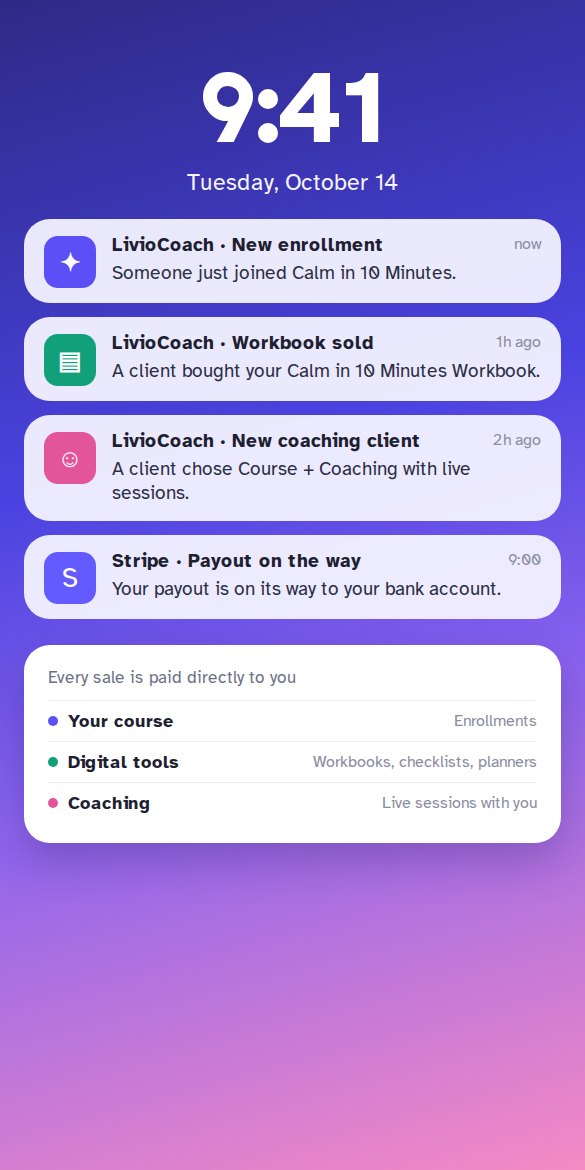
You do. Clients pay on your course page through your own Stripe account. LivioCoach takes no cut; only Stripe's processing fee applies.
Type one sentence about what you teach and see your full course in a couple of minutes.
Create your course free No card needed